
 King Solomon’s words on wisdom and the virtues of living prudently also emphasize the importance of looking not just to immediate gain, but also toward long-term benefits. “Substance got in haste shall be diminished,” he says in Proverbs 13:11, and these principles can equally be applied to today’s world of investments and mortgage lending.
Rocked by scandals, penalized in the form of settlements and new regulations, the mortgage industry continues to court prospective purchasers – investors and homebuyers who, in spite of low interest rates, have remained skittish about applying for funding. These lenders have rolled out a number of options to meet the needs of buyers without much upfront case. One of these is the no closing cost mortgage – an option that can offer short-term benefits but not much in the way of long term gains.
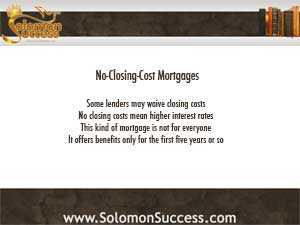
Closing costs – services associated with arranging a loan and securing a property – can run into thousands of dollars. Those fees typically cover the loan origination itself, property appraisals, insurance and related expenditures – a daunting expenditure for some hopeful buyers who have just barely managed to pull together a down best online casino payment. The no-closing-cost mortgage option eliminates those upfront fees. But the price you pay, in most cases, comes in the form of a higher interest rate over the term of the loan.
In some situations, a lender may simply waive the fees altogether. But in general, those costs are absorbed by a higher rate on the loan. For example prospective buyers may be offered a traditional loan with closing costs attached at a rate of 3.75% — but the rate jumps to 4.25% without closing costs. Even with a higher rate, this option may be the way to make a purchase possible for those who don’t have the money for those costs upfront.
But real estate professionals caution that although skipping those closing costs sounds attractive, this option may make sense only if a purchaser plans to sell the property within five years or so. That’s about the time it takes to recoup the waived closing costs at the higher rates charged for this kind of loan – and that makes it somewhat less expensive than paying the closing costs upfront.
For those planning to hold onto the property for a much longer time – and this includes investors following Jason Hartman’s recommendations on income property investing – a no-closing cost mortgage may not make sense, since after the closing costs are recouped, the borrower is still stuck with a higher interest rate than a traditional mortgage would offer.
The picture is generally the same for refinancing an existing mortgage. It’s wise to consider the long view as well as the immediate issue of avoiding an upfront payout, especially if you’re planning on selling the property in the not too distant future.
Mortgage lending options may vary from lender to lender, and not all offer the no-closing-cost variety, particularly if they’re simply servicing a loan that originates with another lender such as Fannie Mae. Financial specialists recommend asking about other loan options if they aren’t offered, and weighing immediate benefits against future returns. For investors looking toward long-term gains, no closing cost mortgage options may offer only short-term relief.
The Solomon Success Team